

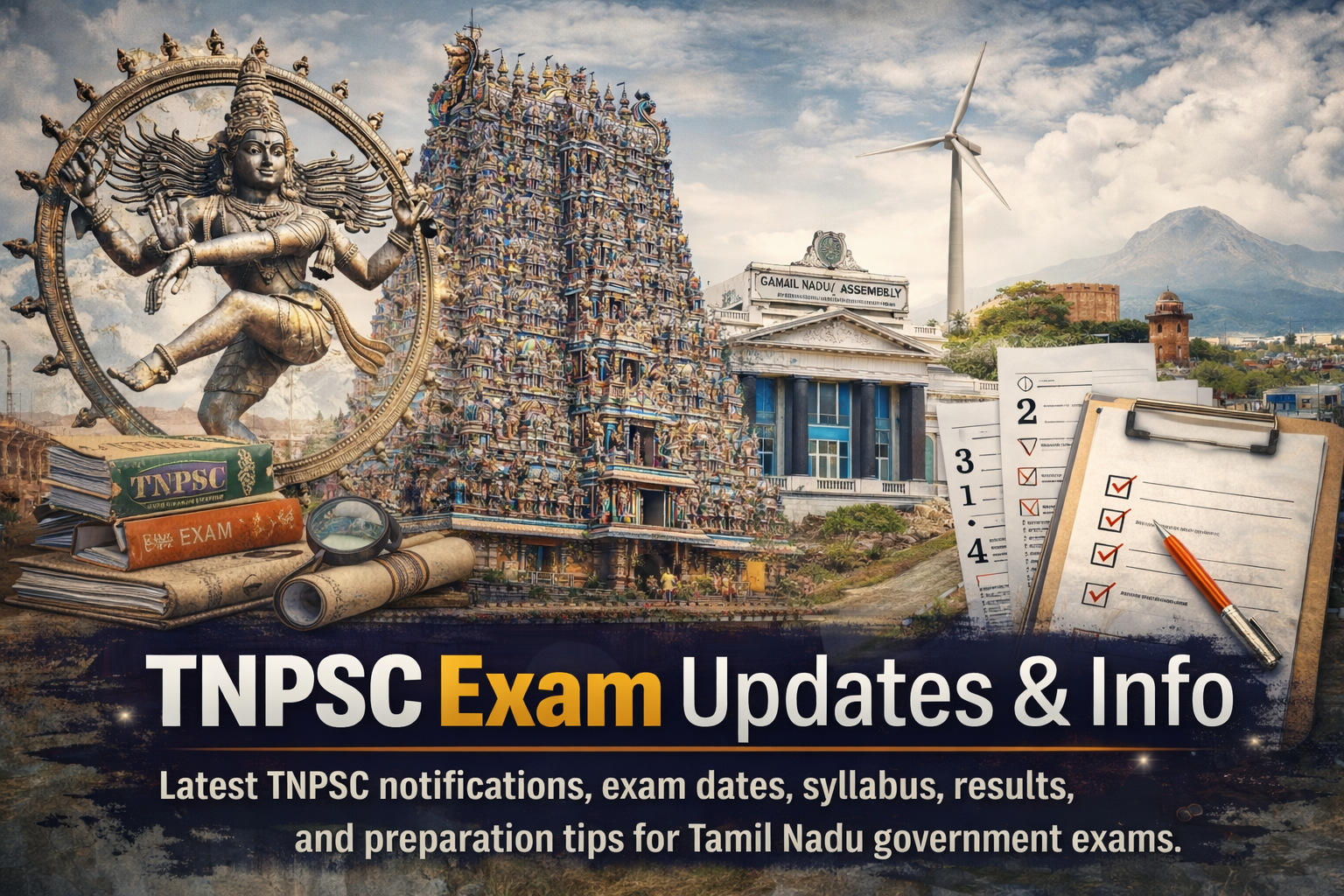
The Tamil Nadu Public Service Commission (TNPSC) examinations represent a gateway to prestigious civil service careers within the state government. Given the high level of competition and the vast nature of the syllabus, aspiring candidates must adopt a methodical and disciplined approach to secure a top rank. Success in these exams is not merely a result of hard work, but a combination of strategic planning, resource management, and consistent practice.
Understanding the TNPSC Exam Pattern
The first step toward a successful TNPSC journey is a thorough understanding of the exam structure. Most TNPSC recruitments, including Group I, II, and IV, follow a tiered system consisting of Prelims, Mains, and an Oral Test (Interview). It is essential to familiarize yourself with the marking scheme, the duration of the papers, and the specific weightage given to General Studies, Aptitude, and Language papers.
Mastering the Syllabus and Core Subjects
The TNPSC syllabus is comprehensive, covering a wide range of subjects. To navigate this effectively, candidates should focus on the following core areas:
- General Studies: This includes History, Geography, Economics, and Indian Polity. Emphasis should be placed on the Indian National Movement and the socio-political history of Tamil Nadu.
- Science and Technology: A basic understanding of everyday science and recent technological advancements is crucial.
- Current Affairs: Staying updated with national and state-level news is vital. Regular reading of reputable newspapers and monthly magazines is highly recommended.
- Aptitude and Mental Ability: This section is often a high-scoring area. Regular practice of mathematical problems and logical reasoning is necessary to improve speed and accuracy.
The Role of Samacheer Kalvi Books
For any TNPSC aspirant, the School Education Department’s “Samacheer Kalvi” textbooks are the primary resource. These books form the foundation of the exam, as a significant portion of the questions is derived directly from them. Candidates should prioritize mastering the content from Class 6 to Class 12, particularly in subjects like Social Science and Science.
Effective Revision and Mock Tests
Preparation is incomplete without rigorous revision. Creating concise notes for each subject can help in the final weeks before the exam. Furthermore, appearing for mock tests is indispensable. Mock tests help candidates:
- Identify strengths and weaknesses in different subject areas.
- Improve time management skills during the actual exam.
- Reduce exam-day anxiety by simulating the real test environment.
- Understand the evolving trends of question types asked by the commission.
Focus on Tamil Language and Culture
In recent years, the TNPSC has increased the emphasis on the Tamil language and the cultural heritage of Tamil Nadu. Proficiency in the Tamil language is often a mandatory requirement or a significant part of the qualifying criteria. Candidates should dedicate ample time to studying Tamil literature, Tirukkural, and the contributions of Tamil scholars to the Indian freedom struggle.
Conclusion
Cracking the TNPSC exam requires a marathon mindset rather than a sprint. By aligning your preparation with the official syllabus, relying on standard textbooks, and maintaining a rigorous practice schedule, you can significantly enhance your chances of success. Stay persistent, stay updated, and approach the examination with a positive and focused attitude.